
There's something special about a backyard deck that goes beyond a simple flat platform. Multi-level…
Ocean View Deck Design Burleigh Heads: Strategic Planning for Maximum Coastal Vistas
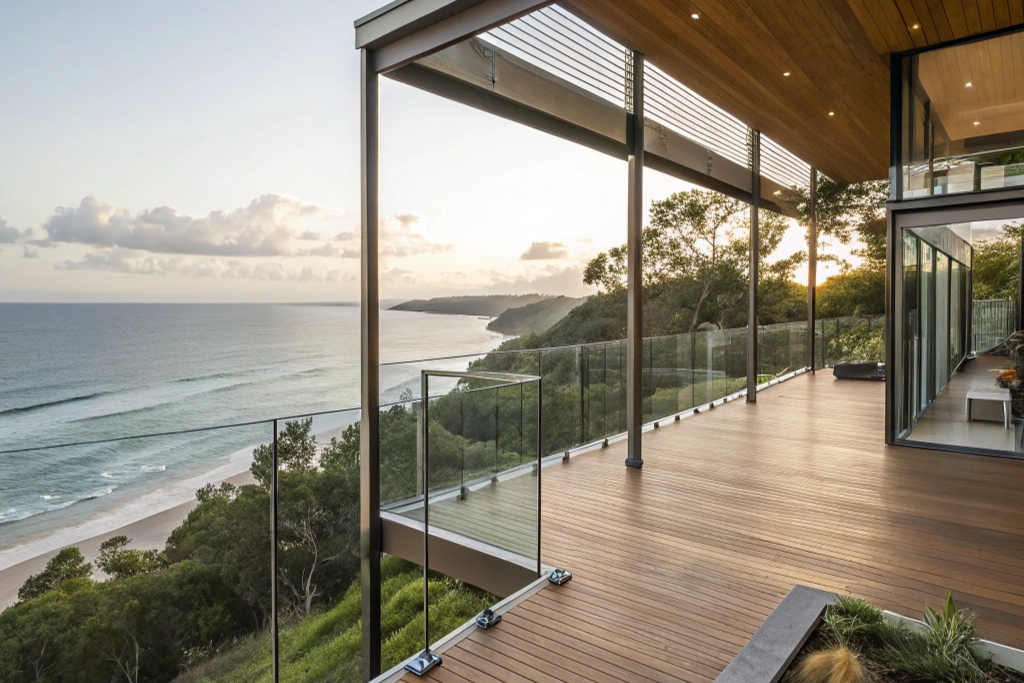
Strategic deck design fundamentals determine whether your Burleigh Heads coastal property captures its full ocean view potential or falls short. The difference between a deck that truly showcases those premium coastal views and one that leaves them partially hidden often comes down to just a few key decisions made during the planning phase.
Coastal deck construction in this region requires specific technical considerations beyond standard residential building practices. Queensland’s coastal building codes require specific structural requirements, while salt air environments necessitate careful material selection and protective treatments. This technical guide covers elevation planning principles, compliant balustrade specifications that minimise view obstruction, structural solutions for sloped sites, and orientation strategies based on local environmental factors. For comprehensive decking services in Burleigh Heads, our local expertise ensures optimal ocean view capture while maintaining full compliance with Queensland coastal building requirements. These principles have transformed countless Burleigh properties into the entertaining spaces their owners originally envisioned.
Maximising Ocean Views Through Strategic Deck Design
Getting the most out of your ocean views comes down to five key design elements that work together: wise elevation choices, the right balustrade materials, proper deck positioning, multi-level layouts for sloped sites, and maintaining clear sight lines.
Elevation and Height: Position your deck 2-3 meters above ground level where the site allows it. Work with your property’s natural slope instead of against it, and consider raised platform construction if you’re dealing with a flat block that needs extra height.
Balustrade Design: Glass panels or minimal wire systems give you the clearest views. Stick to Australian Standard minimum heights for handrails, and place your structural posts where they won’t cut through your best-view corridors.
Deck Orientation: Point your main seating areas straight toward the ocean—factor in what your neighbours have built and any existing vegetation that might block views. Think about where the sun sits during different seasons when you’re planning your layout.
Multi-Level Solutions: Sloped sites work perfectly for stepped deck platforms. Place your primary viewing and entertaining areas on the upper levels, and utilise the lower sections for features such as outdoor kitchens or storage access.
These design approaches provide maximum ocean vista capture while ensuring everything remains structurally safe and compliant with local building requirements.
Elevation Strategies for Maximum Ocean View Capture
Deck elevation represents the most critical factor in ocean view optimisation for Burleigh Heads properties. The fundamental principle involves calculating optimal height based on your property’s distance from the coastline, existing structures, and natural topography. Properties within 500 meters of the beach typically require minimum deck heights of 2.5 meters above natural ground level to clear neighbouring rooflines and vegetation barriers.
Working with Natural Topography
Burleigh’s coastal landscape offers natural elevation advantages that strategic deck design can exploit. Properties on the hillside areas naturally provide better base elevations, while beachfront properties may require engineered solutions. Understanding your site’s existing grade and slope percentages enables optimal deck positioning, maximising height gain with minimal structural investment.
Structural Height Solutions
Raised deck platforms utilise post-and-beam construction methods that comply with Queensland building standards while achieving the necessary elevations. Steel frame systems offer superior strength for higher elevations, while treated timber solutions provide cost-effective options for moderate height requirements. Each structural approach must account for coastal wind loads and foundation requirements specific to sandy coastal soils, as outlined in Queensland’s deck building standards.
Balustrade Selection for Unobstructed Sightlines
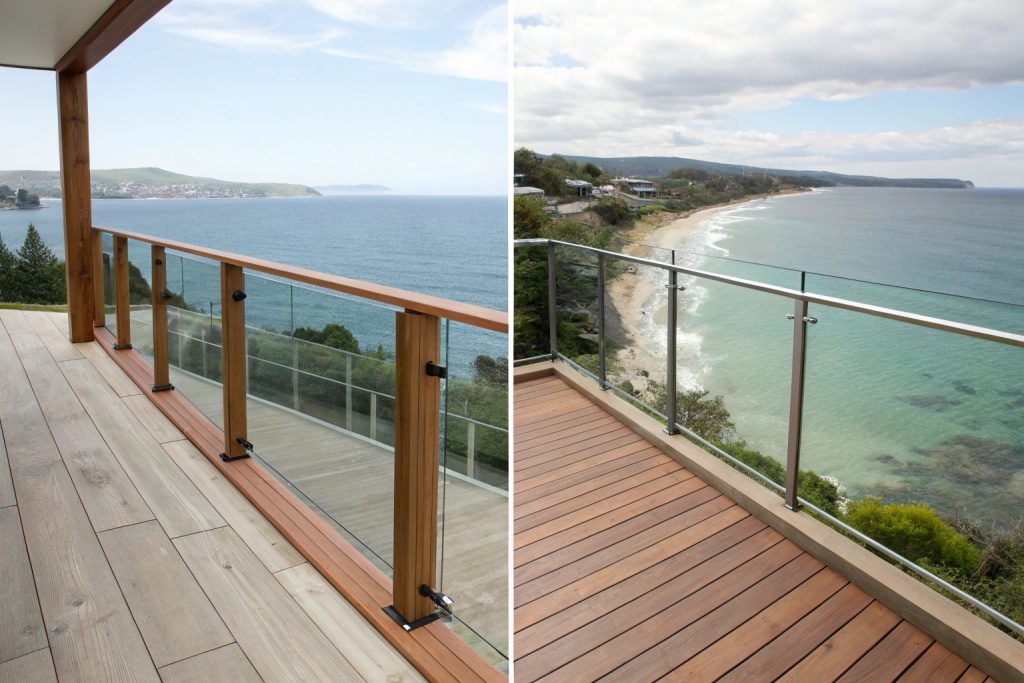
Balustrade design directly impacts the quality of the ocean view, with material and configuration choices determining sightline preservation. Glass panel systems provide maximum transparency while meeting Australian Standard safety requirements. The key consideration involves balancing structural necessity with minimising visual obstruction.
Glass Balustrade Systems
Frameless glass panels provide superior preservation of ocean views compared to framed alternatives. Structural glazing techniques enable continuous glass runs, eliminating visual interruptions from vertical supports. Tempered safety glass specifications ensure compliance with coastal building requirements while providing uninterrupted ocean vistas. For complete balustrade safety specifications, refer to the Australian Standard requirements for barriers and handrails.
Alternative Low-Profile Options
Wire balustrade systems offer cost-effective solutions for preserving views when glass installation exceeds budget parameters. Stainless steel cable configurations minimise visual obstruction while maintaining required safety barriers. These systems require precise tensioning and regular maintenance in coastal environments due to exposure to salt air.
Multi-Level Deck Designs for Sloping Burleigh Properties
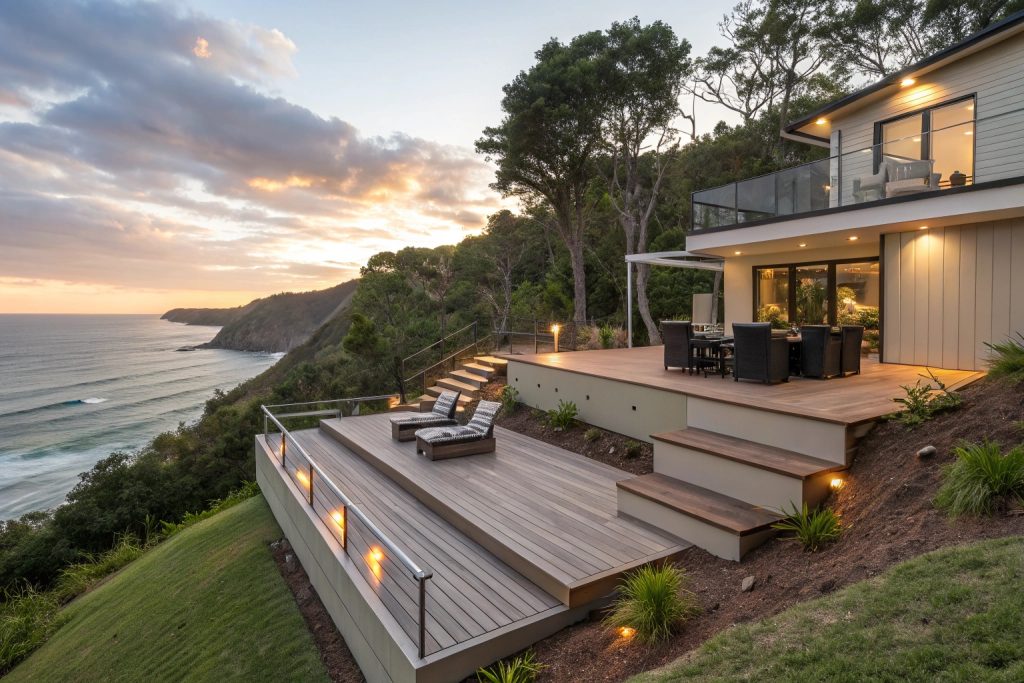
Sloping coastal properties in Burleigh Heads present unique opportunities for tiered deck systems that progressively capture ocean views at multiple elevations. Multi-level construction allows primary entertaining areas to occupy the highest points while secondary functional spaces utilise lower elevations. This approach maximises the natural topography’s advantages while creating distinct outdoor zones for various activities.
Stepped Platform Configuration
Stepped deck platforms follow the natural contour of sloping sites, creating defined elevation changes that enhance access to ocean views. Each platform level serves specific functions, with upper tiers dedicated to primary ocean viewing and entertainment, while lower levels accommodate utility functions such as outdoor kitchens or storage access. Structural connections between levels require engineered solutions that account for differential settling and coastal soil conditions.
Terraced Integration Techniques
Terraced deck systems seamlessly integrate with existing landscape features and retaining walls, creating smooth elevation transitions. These designs utilise existing site infrastructure while incorporating strategic viewing platforms at carefully calculated heights. Integration with landscape terracing provides a natural visual flow while achieving the necessary elevation gains for optimal ocean views.
Orientation Strategies for Optimal Ocean Vista Positioning
Deck orientation involves precise positioning calculations that take into account solar exposure, prevailing winds, and neighbouring structures. Burleigh’s coastal environment requires specific orientation considerations, including morning sun angles, afternoon wind patterns, and seasonal weather variations that affect outdoor comfort levels.
Solar Angle Considerations
Morning eastern exposure provides natural light during breakfast and early entertaining periods while avoiding harsh afternoon western sun. Deck positioning should maximise ocean-facing orientations while incorporating shading solutions to ensure extended outdoor comfort. Pergola integration and strategic roof line extensions provide weather protection without compromising ocean views.
Wind Pattern Management
Coastal wind patterns significantly impact deck usability and require strategic positioning to minimise exposure during peak wind periods. Burleigh’s prevailing southeasterly winds during summer months necessitate protective screening or positioning that utilises existing structures as natural windbreaks. Understanding seasonal wind variations enables year-round deck optimisation rather than focusing on a single season.
Privacy Solutions That Preserve Ocean Sightlines
Privacy requirements often conflict with ocean view objectives, requiring design solutions that provide screening without eliminating coastal vistas. Strategic privacy planning involves selective screening that blocks neighbouring sightlines while preserving ocean access.
Selective Screening Techniques
Vertical screening elements positioned at strategic angles provide privacy from neighbouring properties while maintaining ocean-view corridors. Adjustable privacy screens enable seasonal adjustments based on vegetation growth and neighbouring property developments. These systems require materials suited to coastal exposure while providing functional privacy solutions.
Landscape Integration for Natural Privacy
Native coastal vegetation provides natural privacy screening that complements rather than competes with ocean views. Strategic plant placement creates privacy barriers at ground level while allowing elevated ocean views to remain unobstructed. Plant selection must consider salt tolerance and mature growth patterns that won’t eventually block desired sight lines.
Case Studies: Before and After View Transformations in Burleigh
Practical applications of strategic deck design principles demonstrate measurable improvements in capturing ocean views and enhancing property functionality. These documented transformations showcase specific design solutions implemented on actual Burleigh Heads properties, which present varying topographical challenges and structural constraints.
Elevated Platform Solution on Flat Coastal Block
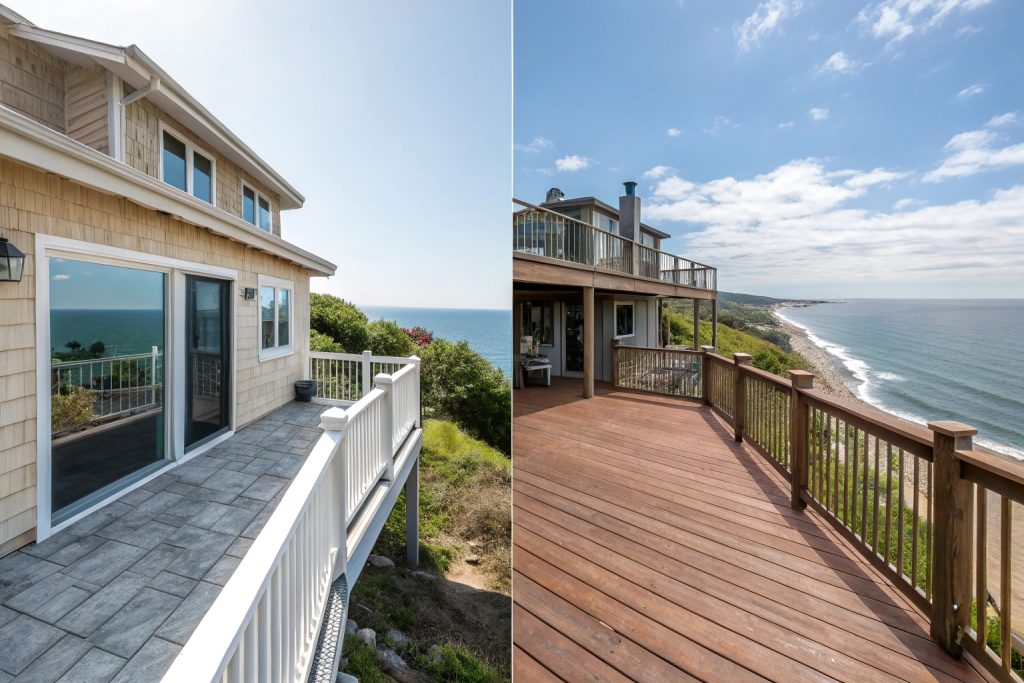
A standard ground-level deck on a flat beachfront property initially provided limited ocean views due to neighbouring fence lines and established vegetation. The transformation involved constructing a raised platform system 2.8 meters above natural grade using steel posts and beam construction. Glass balustrade installation replaced solid timber railings. In comparison, strategic positioning moved the primary entertaining area 4 meters closer to the street boundary, thereby clearing neighboring rooflines. The redesigned elevation captured unobstructed ocean views across a 180-degree arc compared to the original 45-degree limited vista.
Multi-Level Terraced System on Sloping Site
A sloping property with existing retaining walls presented opportunities for integrated terraced deck construction. The original single-level deck positioned at the rear of the property captured minimal ocean glimpses through neighbouring structures. The transformation created three distinct platform levels following the natural site contours, with the upper entertainment deck positioned 5.2 meters above street level. Frameless glass panels maintained sight lines between levels while stepped positioning maximised view capture from multiple outdoor zones. The upper platform achieved comprehensive ocean panorama visibility, while lower levels provided functional outdoor space without view competition.
Corner Property Orientation Optimization
A corner block property originally featured deck positioning that faced the side boundary rather than optimal ocean orientation. Structural limitations prevented complete reconstruction, requiring strategic modification approaches. The solution involved a partial deck extension toward the corner boundary, combined with privacy screening that blocked neighbouring sight lines while maintaining open ocean-view corridors. Adjustable louvre systems provided wind protection during peak weather periods while maintaining access to views during calm conditions. This orientation adjustment increased the effective ocean viewing area while improving outdoor comfort levels throughout seasonal weather variations.

